
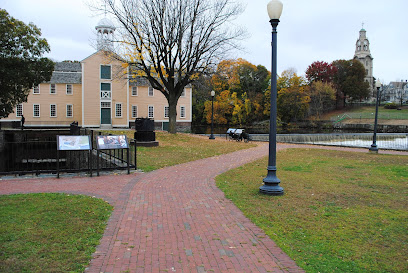
Slater Mill Historic Site (Pawtucket, RI)
Nestled along the banks of the Blackstone River in Pawtucket, Rhode Island, the Slater Mill Historic Site stands as a testament to America’s industrial revolution and the birthplace of the nation’s textile industry. With its rich history, architectural significance, and commitment to education, the Slater Mill continues to be a cherished landmark and a window into the past. More
Historical Significance:
The Slater Mill, built-in 1793, holds a significant place in American history. It was the brainchild of Samuel Slater, an English immigrant and skilled industrialist. Slater’s mill, often referred to as “the birthplace of the American Industrial Revolution,” marked a turning point in the nation’s economic landscape. The construction of this water-powered textile mill introduced mechanized textile manufacturing techniques to the United States and set the stage for the rapid industrialization that would shape the nation’s future.
Architecture and Preservation:
The Slater Mill complex showcases remarkable architecture that reflects the industrial style of the 18th century. The main building, made of local stone and wooden beams, exudes a sense of strength and durability. It is a remarkable example of early mill construction techniques, utilizing water power to drive the machinery within.
Over the years, the Slater Mill has undergone extensive preservation efforts to maintain its historical integrity. The site has been meticulously restored, ensuring that visitors can experience the mill as it was during its operational years. The preservation efforts also extend to the surrounding buildings and landscapes, creating an immersive historical experience for all who visit.
Museum and Exhibits:
Today, the Slater Mill Historic Site serves as a living museum dedicated to educating the public about the industrial revolution and its impact on American society. The site offers guided tours that take visitors through the mill’s various sections, providing a glimpse into the manufacturing processes of the time. Knowledgeable guides share stories about the workers, the machinery, and the social and economic implications of the industrial revolution.
The site also features a range of exhibits that delve deeper into the history of the mill and its significance. Visitors can explore interactive displays, artifacts, and multimedia presentations that bring the past to life. From the early days of textile manufacturing to the impact of the mill on the labor movement, the exhibits provide a comprehensive understanding of the industrial revolution’s transformative effects.
Education and Community Outreach:
The Slater Mill Historic Site is not only a destination for tourists and history enthusiasts but also a valuable educational resource for schools and the local community. The site offers educational programs and workshops that engage students of all ages. Through hands-on activities, students can learn about the science and engineering behind early textile manufacturing, as well as the social and economic consequences of industrialization.
The site also hosts community events, such as craft fairs, concerts, and festivals, that celebrate the region’s history and culture. These events foster a sense of community pride and engagement while showcasing the enduring legacy of the Slater Mill.
Conclusion:
The Slater Mill Historic Site in Pawtucket, Rhode Island, stands as a symbol of America’s industrial revolution and its lasting impact on the nation. From its architectural significance to its role in transforming the textile industry, the mill serves as a gateway to the past, offering visitors a chance to explore and understand the birth of American industrialization. With its commitment to preservation, education, and community outreach, the Slater Mill Historic Site ensures that the story of America’s industrial revolution continues to be told for generations to come. Next Article